
Healthy, Efficient, and Resilient Homes
Aging in Place Without Making the Home Feel Clinical
Universal design can make a home more beautiful and usable for everyone when it is integrated through proportion, circulation, entries, bathrooms, lighting, and adaptability.
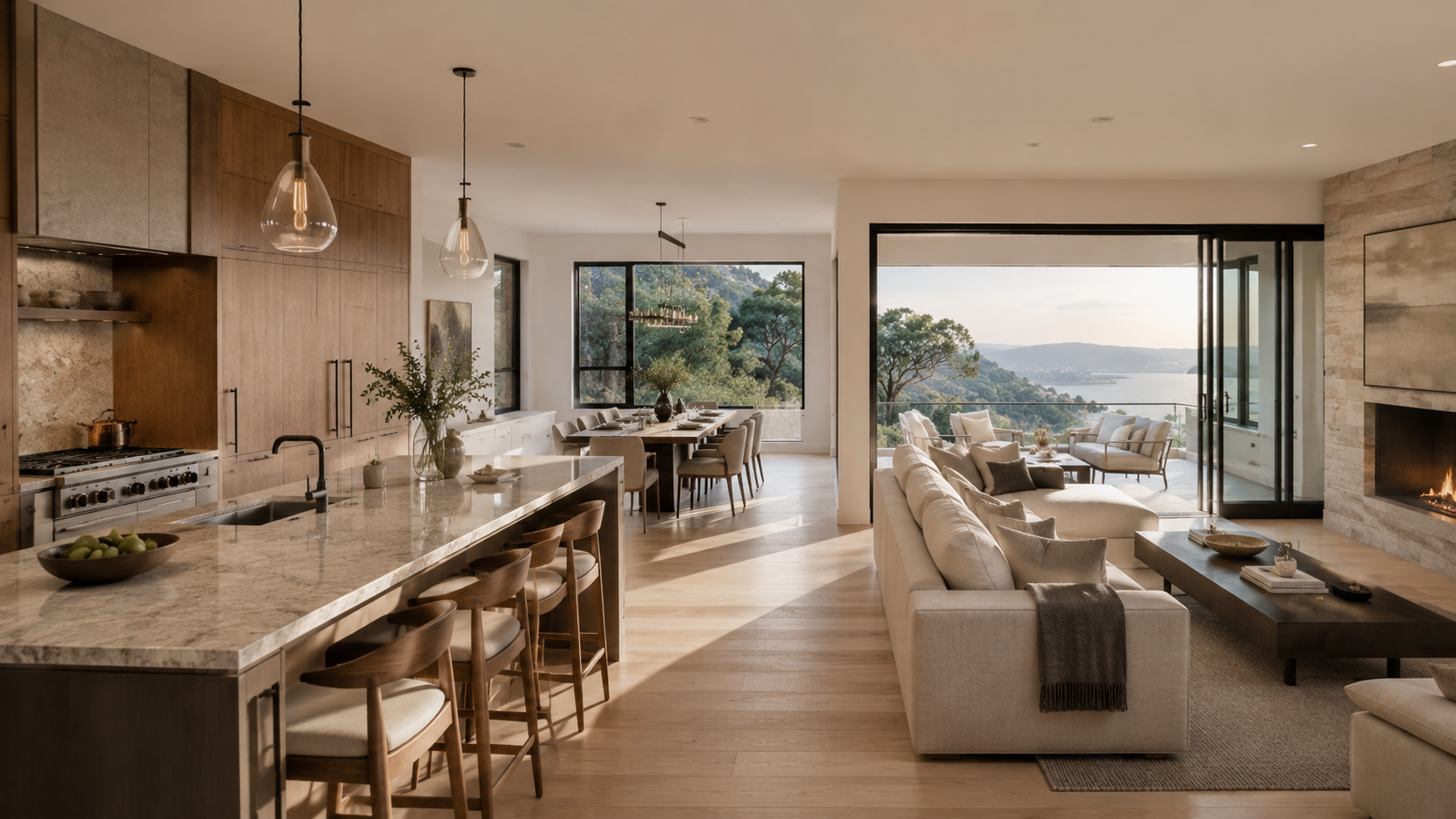
A high-performance home is not a shopping list of premium products. It is an integrated response to climate, site, enclosure, systems, health, water, hazards, and long-term use. Universal design can make a home more beautiful and usable for everyone when it is integrated through proportion, circulation, entries, bathrooms, lighting, and adaptability.
This guide explains aging in place custom home design through the Builder Concierge operating principle: connect the property, design, total investment, financing pathway, team, decisions, and contract record before asking the buyer to make a major commitment. The objective is not artificial certainty. It is disciplined visibility into what is known, what is assumed, who must verify it, and when it becomes consequential.
The answer in one sentence
Universal design can make a home more beautiful and usable for everyone when it is integrated through proportion, circulation, entries, bathrooms, lighting, and adaptability.
Why this matters
National resources such as ENERGY STAR — Energy-Efficient New Homes, U.S. Department of Energy — Efficient New Homes Program, and U.S. EPA — Indoor AirPlus can improve early research, but they do not replace local rules, current market information, or project-specific professional judgment. Authoritative sources should sharpen the diligence plan and establish common definitions. The final answer still has to be verified for the actual parcel, design, lender, builder, agreement, and jurisdiction.
A custom home is a chain of connected commitments. One apparently isolated choice can change the buildable envelope, structural system, appraisal, lender approval, builder scope, permit set, procurement plan, operating cost, or move-in date. The strongest projects make the relationship among those decisions visible.
Builder Concierge’s point of view
Builder Concierge is built around a simple principle: the home, the property, the investment, and the delivery path must agree before the buyer is asked to commit.
That requires more than a folder of documents. It requires a controlled project record that distinguishes:
- an idea from an approved requirement;
- a concept from a buildable solution;
- an estimate from a committed price;
- an allowance from a selection;
- a public-data screen from professional verification;
- a discussion from an approval;
- and an attractive opportunity from a responsible next step.
Five decisions that determine the outcome
1. Create a step-free everyday route where feasible
Create a step-free everyday route where feasible. Set a measurable project goal before choosing products. Comfort, air quality, water use, energy, hazard resistance, and accessibility each require different verification methods and design decisions. For aging in place custom home design, the record should show the current assumption, the evidence supporting it, the person responsible for verification, and the effect on the property, design, total investment, schedule, financing, or contract.
2. Use comfortable clearances, doors, and circulation
Use comfortable clearances, doors, and circulation. Reduce the load or exposure first. Orientation, enclosure, drainage, shade, defensible space, efficient layout, and source control are usually more durable than adding equipment to compensate for a weak design. For aging in place custom home design, the record should show the current assumption, the evidence supporting it, the person responsible for verification, and the effect on the property, design, total investment, schedule, financing, or contract.
3. Plan at least one adaptable bedroom and bathroom path
Plan at least one adaptable bedroom and bathroom path. Coordinate the system. Enclosure, HVAC, ventilation, water, structure, landscape, electrical, and controls interact, so an improvement in isolation can create a new moisture, comfort, or maintenance problem. For aging in place custom home design, the record should show the current assumption, the evidence supporting it, the person responsible for verification, and the effect on the property, design, total investment, schedule, financing, or contract.
4. Add blocking, lighting, controls, and storage that support changing needs
Add blocking, lighting, controls, and storage that support changing needs. Specify installation and testing, not only product names. Performance depends on details, sequencing, commissioning, and field verification. For aging in place custom home design, the record should show the current assumption, the evidence supporting it, the person responsible for verification, and the effect on the property, design, total investment, schedule, financing, or contract.
5. Design flexibility without labeling the home for one age group
Design flexibility without labeling the home for one age group. Create an operating and maintenance plan. Filters, drainage, vegetation, sealants, sensors, controls, and protective assemblies only continue to perform when the owner knows what to inspect and when. For aging in place custom home design, the record should show the current assumption, the evidence supporting it, the person responsible for verification, and the effect on the property, design, total investment, schedule, financing, or contract.
Decision-control table
| Decision | What verifies it | What it can change | Status |
|---|---|---|---|
| Create a step-free everyday route where feasible | Evidence or professional input | Cost/schedule impact | Approved / open |
| Use comfortable clearances, doors, and circulation | Evidence or professional input | Cost/schedule impact | Approved / open |
| Plan at least one adaptable bedroom and bathroom path | Evidence or professional input | Cost/schedule impact | Approved / open |
| Add blocking, lighting, controls, and storage that support changing needs | Evidence or professional input | Cost/schedule impact | Approved / open |
| Design flexibility without labeling the home for one age group | Evidence or professional input | Cost/schedule impact | Approved / open |
Use this table as a live control, not a one-time exercise. Every open item should have an owner and a date by which it affects another decision.
A practical decision framework
Step 1: Set performance goals
Choose measurable targets for comfort, energy, air, water, durability, hazard resistance, and accessibility. Before advancing, name the approver, record the supporting evidence, and identify any condition that remains open.
Step 2: Reduce loads and exposure
Use site planning, building form, enclosure, drainage, and source control to reduce the problem before adding equipment. Before advancing, name the approver, record the supporting evidence, and identify any condition that remains open.
Step 3: Design integrated systems
Coordinate architecture, engineering, landscape, controls, materials, and operating assumptions. Before advancing, name the approver, record the supporting evidence, and identify any condition that remains open.
Step 4: Verify installation
Inspect, test, balance, commission, and document the installed work. Before advancing, name the approver, record the supporting evidence, and identify any condition that remains open.
Step 5: Operate and maintain
Provide the owner with the maintenance and operating practices required to preserve performance. Before advancing, name the approver, record the supporting evidence, and identify any condition that remains open.
Common mistakes
- Buying efficient equipment for an inefficient design. Return to the performance goal and verify whether the proposed correction solves the system-level problem.
- Treating air sealing, ventilation, moisture, and filtration as separate topics. Return to the performance goal and verify whether the proposed correction solves the system-level problem.
- Adding resilience features without studying the parcel-level hazard. Return to the performance goal and verify whether the proposed correction solves the system-level problem.
- Skipping testing because the specification looked strong on paper. Return to the performance goal and verify whether the proposed correction solves the system-level problem.
What the project record should contain
For this topic, the active project record should capture:
- The current question or decision.
- The governing property, design, financial, lender, contract, or jurisdictional condition.
- The source of the information and the date it was reviewed.
- The professional or decision-maker responsible for verification.
- The alternatives considered and why one was selected.
- The estimated effect on total investment and schedule.
- The approval status and the document or drawing that now controls.
- The next deadline and downstream dependency.
This is how the team prevents a resolved issue from quietly becoming unresolved again.
A linkable resource to publish with this article
Publish a downloadable Aging in Place Without Making the Home Feel Clinical decision worksheet beside this article. Include fields for the active question, assumptions, authoritative source, local verification, responsible party, deadline, cost effect, schedule effect, dependent decisions, and approval status. An original tool is more likely to earn citations than a generic summary because professionals can use it with clients, students, or project teams.
Frequently asked questions
What is the most important thing to understand about aging in place custom home design?
Universal design can make a home more beautiful and usable for everyone when it is integrated through proportion, circulation, entries, bathrooms, lighting, and adaptability. The decision should be based on the whole project rather than a single attractive feature, price, promise, or document.
When should aging in place custom home design be addressed?
It should be addressed early enough to shape the next commitment and revisited whenever property information, design scope, budget, financing, schedule, or team responsibility changes.
Who should verify project-specific requirements?
Use the qualified local professionals appropriate to the issue, which may include architects, engineers, surveyors, builders, lenders, attorneys, insurers, code officials, environmental consultants, or other specialists. This article is educational and is not project-specific legal, financial, engineering, or construction advice.
The responsible next step
Builder Concierge helps buyers set performance priorities early enough for the property, design team, builder, and budget to respond intelligently.
Start your Builder Concierge project
Related Builder Concierge guides
Sources and further reading
- ENERGY STAR — Energy-Efficient New Homes — EPA-backed new-home performance and certification information.
- U.S. Department of Energy — Efficient New Homes Program — High-performance new-home program formerly known as Zero Energy Ready Home.
- U.S. EPA — Indoor AirPlus — Voluntary program for healthier indoor air in new homes.
- U.S. EPA — Home Ventilation and Indoor Air Quality — Guidance on ventilation and indoor pollutant control.
- U.S. EPA — Radon-Resistant Construction — Radon-resistant new-construction techniques.
- U.S. EPA — WaterSense Labeled Homes — Water-efficient home design, products, and certification.
- U.S. EPA — WaterSense Hot-Water Distribution — Efficient hot-water distribution design options.
- U.S. Fire Administration — Identify Wildland-Urban Interface Risk — Community-level wildfire exposure and risk resources.
- FEMA — Know Your Flood Risk — Homeowner guidance for understanding flood risk.
- HUD — Residential Remodeling and Universal Design — Universal-design concepts for homes across ages and abilities.
Builder Concierge articles are original educational content and commentary. External sources are cited for research and context; they do not endorse Builder Concierge. This article is not legal, financial, architectural, engineering, surveying, environmental, insurance, tax, or construction advice.
Sources
Frequently asked
+What is the most important thing to understand about aging in place custom home design?
+When should aging in place custom home design be addressed?
+Who should verify project-specific requirements?
Continue reading
Healthy, Efficient, and Resilient Homes
How to Build an Energy-Efficient Custom Home
Efficiency begins with site, shape, enclosure, glazing, and systems working together; appliances and gadgets come later.
June 13, 2026 · 8 min read
Healthy, Efficient, and Resilient Homes
How to Design a Flood-Resilient Custom Home
Flood resilience requires understanding the hazard, elevation, access, drainage, utilities, materials, insurance, and recovery strategy.
June 21, 2026 · 8 min read